
Japan’s Economic Reboot: Unlocking Equity Potential Through Digital Transformation
AUTHORS
Akira Fuse
Institutional Equity
Portfolio Manager
Carl Ang
Fixed Income
Research Analyst
Ross Cartwright
Lead Strategist
Strategy and Insights Group
In Brief
- Japan’s persistent labor shortages and rising wages are contributing to a structural shift from low to moderate inflation.
- Companies are accelerating investment in digital transformation aimed at improving productivity and address labor constraints.
- The IT services sector, especially systems integrators, benefits from this trend, often outpacing GDP growth and supporting Japan’s economic modernization.
Labor Market and Inflation Normalization in Post-Pandemic Japan
Japan’s demographic challenges — namely, an ageing and shrinking population — have intensified labor shortages across multiple sectors since the pandemic. This has contributed to a persistently tight labor market and nominal wage growth at levels not seen in decades. The expansion in labor supply, largely driven by increased participation from women and seniors, is nearing its limits. In this environment of structurally higher inflation, there are clear signs of increased labor mobility, particularly among younger workers. Over time, this shift may support economic growth by potentially reallocating labor from low- to high-productivity sectors.
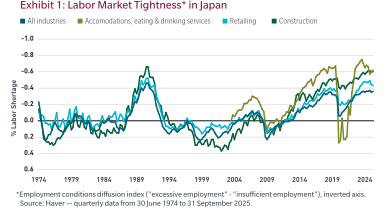
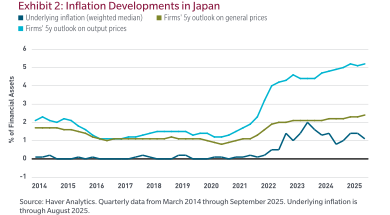
This sustained tightness in Japan’s labor market has underpinned a significant transition from extremely low inflation to moderate, persistent inflation. Initial price pressures were triggered by pandemic-related supply chain disruptions as well as rising energy and food costs, amplified by a weaker yen. However, this ongoing inflation suggests the emergence of a structural change: Japanese firms are increasingly willing to raise final prices beyond general cost increases to protect profit margins, supported by rising wages and other input costs. This shift in corporate inflation expectations, now well above the Bank of Japan’s 2% target, has encouraged labor-saving and productivity-enhancing investments, such as in digital transformation initiatives. Notably, software investment has surged in labor-intensive sectors, including accommodation, food services, retail and construction.
Equity Perspective: Digital Transformation as a Long-Term Opportunity
From an equity standpoint, investment in labor-saving technologies represents a durable and attractive opportunity. Japan’s prolonged deflationary period and conservative management practices left domestic companies lagging in digital investment and productivity improvements. The recent uptick in inflation has catalyzed a robust flow of capital into digital transformation (DX) investing in areas such as:
- Business process automation
- Implementation of cloud-based systems for inventory and supply chain management
- Upgrading legacy IT infrastructure and transitioning to AI platforms
Corporate budgets for DX investment are steadily increasing, and this trend is expected to accelerate further as wage pressures and the focus on profitability intensify.
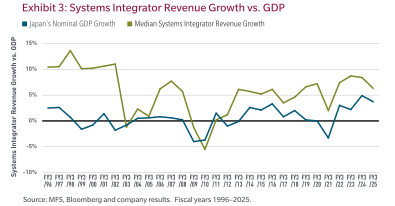
A key beneficiary of this DX investment trend is the IT services industry, particularly system integrators who support digital transformation through consulting and systems design. These companies have consistently delivered revenue growth 2–3% above GDP for over a decade, even maintaining DX budgets during the COVID period. This resilience suggests that the momentum behind digital investment will not only continue but will likely accelerate as Japan adapts to a new inflationary environment.
Conclusion
Japan’s evolving labor market and inflation dynamics are driving a structural shift in corporate behavior, with increased investment in productivity and digital transformation. This presents potential compelling opportunities for investors, especially in sectors facilitating technological advancement and operational efficiency. Maintaining a long-term perspective on Japan’s IT services industry remains prudent, given that the sector has, at times, grown faster than GDP and support the country’s economic modernization.
The views expressed are those of the author(s) and are subject to change at any time. These views are for informational purposes only and should not be relied upon as a recommendation to purchase any security or as a solicitation or investment advice. No forecasts can be guaranteed. Past performance is no guarantee of future results.
Diversification does not guarantee a profit or protect against a loss. Past performance is no guarantee of future results.