Global Flexible Multi-Asset Fund
THIS INFORMATION IS FOR MARKETING PURPOSES ONLY
Please note that this is an actively managed product.
Class I shares are only available to certain qualifying institutional investors.
-
Fact Sheet - Documents
Global Flexible Multi-Asset Fund
Investment Objective
Seeks capital appreciation, measured in US dollars
Investment Focus
By including fundamental, quantitative and macro views in a global flexible multi-asset strategy, seeks to assess risk premia through a consistent framework across both security selection and asset allocation, enabling optimization between bottom-up and top-down positioning
Flexible approach that aims to capture alpha through strategic asset allocation, tactical flexibility and bottom-up security selection over the full global economic cycle
Seeks to incorporate MFS' investment insights from across the entire investment platform
Important Risk Considerations
The fund may not achieve its objective and/or you could lose money on your investment in the fund.
Stock: Stock markets and investments in individual stocks are volatile and can decline significantly in response to or investor perception of, issuer, market, economic, industry, political, regulatory, geopolitical, environmental, public health, and other conditions.
Bond: Investments in debt instruments may decline in value as the result of, or perception of, declines in the credit quality of the issuer, borrower, counterparty, or other entity responsible for payment, underlying collateral, or changes in economic, political, issuer-specific, or other conditions. Certain types of debt instruments can be more sensitive to these factors and therefore more volatile. In addition, debt instruments entail interest rate risk (as interest rates rise, prices usually fall). Therefore, the portfolio's value may decline during rising rates. Portfolios that consist of debt instruments with longer durations are generally more sensitive to a rise in interest rates than those with shorter durations. At times, and particularly during periods of market turmoil, all or a large portion of segments of the market may not have an active trading market. As a result, it may be difficult to value these investments and it may not be possible to sell a particular investment or type of investment at any particular time or at an acceptable price. The price of an instrument trading at a negative interest rate responds to interest rate changes like other debt instruments; however, an instrument purchased at a negative interest rate is expected to produce a negative return if held to maturity.
Derivatives: Investments in derivatives can be used to take both long and short positions, be highly volatile, involve leverage (which can magnify losses), and involve risks in addition to the risks of the underlying indicator(s) on which the derivative is based, such as counterparty and liquidity risk.
Value: The portfolio's investments can continue to be undervalued for long periods of time, not realize their expected value, and be more volatile than the stock market in general.
Growth: Investments in growth companies can be more sensitive to the company's earnings and more volatile than the stock market in general.
Commodity: Commodity-related investments can be more volatile than investments in equity securities or debt instruments and can be affected by changes in overall market movements, commodity index volatility, changes in interest rates, currency fluctuations, or factors affecting a particular industry or commodity, and demand/supply imbalances in the market for the commodity. Events that affect the financial services sector may have a significant adverse effect on the portfolio.
Please see the offering documents or Information Memorandum for more details, including information on fund risks and expenses.
Fund Information
- Fund Inception 20-Nov-2024
- Net Assets (US$ M) As of 30-Jun-26 US$21.98
- Fiscal Year End JANUARY
-
SFDR Classification
Article 8
Article 6: Integrates sustainability risks into the investment process.
Article 8: Systematically promotes a stated environmental or social characteristic and provides enhanced disclosure accordingly.
Article 9: Typically for "impact" funds, which have a dual objective of financial return and specific environmental or social outcomes.
- Benchmark 60% MSCI All Country World Index/ 40% Bloomberg Global Aggregate (USD Hedged) Blended Index
Share Class Information
- Class Inception 20-Nov-2024
- Net Asset Value (NAV) As of 22-Jul-26 $122.24
- Most Recent NAV Change As of 22-Jul-26 $0.06 | 0.05%
- ISIN LU2864446013
- SEDOL BQV3GC3
- WKN A40JNL
- Bloomberg MFGFMI1 LX
- CUSIP L63678426
- Maximum Sales Charge 0%
- Benchmark 60% MSCI All Country World Index/ 40% Bloomberg Global Aggregate (USD Hedged) Blended Index
Managers

Fund Positioning (%)
As of 30-Jun-26
| Active Allocation | Derivative Positions 1,* | Net Exposure | |
|---|---|---|---|
| Equity* | 56.45 | -1.87 | 54.58 |
| Fixed Income* | 37.44 | 37.44 | |
| Commodity | 4.55 | 4.55 | |
| Cash & Cash Equivalents | 6.92 | 6.92 | |
| Other | -3.49 | ||
| Total Net Exposure Summary | 100.00 | ||
Market exposure of derivative position utilized to adjust fund market exposure.
Cash & Cash Equivalents includes any cash, investments in money market funds, and/or other assets less liabilities. The total also includes investments in short term securities (including short-term governments securities).
Kevin Dwan
Portfolio Manager
Kevin M. Dwan is an investment officer and equity portfolio manager for the International Growth strategies at MFS Investment Management® (MFS®). In this role, he is responsible for final buy and sell decisions, portfolio construction and risk and cash management. He also participates in the research process and strategy discussions. He is based in Singapore. Kevin joined MFS in 2005 as a global equity analyst. He was named director of research -- Asia in 2007 and assumed his current role in 2012. Prior to MFS, he worked for nine years at Putnam Investments in various roles in Boston, London and Tokyo, including equity analyst and sector-sleeve portfolio manager for international core equity strategies. He began his career in the financial services industry in 1996. Kevin earned a Bachelor of Arts degree in economics from Harvard University and a Master of Business Administration degree from Harvard Business School.
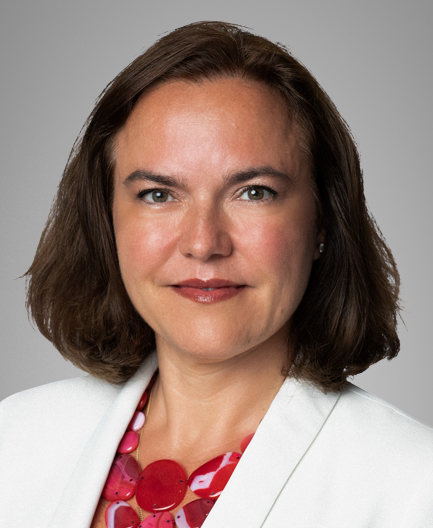
Pilar Gomez-Bravo, CFA
Portfolio Manager
Pilar Gomez-Bravo, CFA, is co-chief investment officer of Fixed Income at MFS Investment Management® (MFS®). As co-CIO, she has joint oversight of MFS' global fixed income team and works collaboratively with MFS' investment leadership team to ensure its fixed income investors have the tools and skill sets necessary to serve the firm's clients globally. She is also a fixed income portfolio manager with oversight of the firm's Global Aggregate and Global Credit portfolio management teams. She is based in MFS' London office. Pilar joined MFS in 2013 as a portfolio manager from Imperial Capital, where she served as a managing director. She was named director of Fixed Income -- Europe in 2017 before being named co-CIO in 2023. She previously served as a portfolio manager and head of research at Negentropy Capital, within Matrix Asset Management, and cofounded Marengo Asset Management. From 2006 through 2010, she served as a senior portfolio manager and head of credit, Europe, for Neuberger Berman. She began her career in financial services at Lehman Brothers in 1997 and spent nine years with the firm, including serving as head of investment grade credit research for Europe. Pilar earned the equivalent of an LL.B degree in Law and a Bachelor of Science degree in Economics and Business Science from Universidad Pontificia Comillas (ICADE E-3, Spain). She also earned a Master of Business Administration degree from the Massachusetts Institute of Technology's Sloan School of Management. She has held the Chartered Financial Analyst designation since 2000.
Performance
12 Month Total Returns (%)
12 Month Total Returns (%)
As of 30-Jun-26 [updated monthly]
| 12 month period ending: |
30-Jun-22
or Life
Life performance is only shown when 5 years of performance is not available. |
30-Jun-23 | 30-Jun-24 | 30-Jun-25 | 30-Jun-26 | YTD % * | Class Inception |
|---|---|---|---|---|---|---|---|
| Class I1 Shares, US Dollars at NAV | 13.20 | - | - | - | 13.34 | 5.93 | 20-Nov-2024 |
| 60% MSCI All Country World Index/ 40% Bloomberg Global Aggregate (USD Hedged) Blended Index | - | - | - | - | 15.17 | - | - |
| 12 month period ending: | Class I1 Shares, US Dollars at NAV | 60% MSCI All Country World Index/ 40% Bloomberg Global Aggregate (USD Hedged) Blended Index |
|---|---|---|
|
30-Jun-22
or Life
Life performance is only shown when 5 years of performance is not available. |
13.20 | - |
| 30-Jun-23 | - | - |
| 30-Jun-24 | - | - |
| 30-Jun-25 | - | - |
| 30-Jun-26 | 13.34 | 15.17 |
| YTD % * | 5.93 | - |
| Class Inception | 20-Nov-2024 | - |
Important Performance Information
Performance results reflect ongoing charges and any applicable expense subsidies and waivers in effect during the periods shown. All historic results assume distributions within the fund and/or the share class are reinvested.
Class I1 Roll-Up shares do not pay distributions to shareholders.
Past performance is not a reliable indicator for future results. All financial investments involve an element of risk. The value of investments may rise and fall so you may get back less than originally invested.
Investors should consider the risks, including lower returns, related to currency movements between their investing currency and the portfolio's base currency, if different.
Average Annual Total Returns (%)
Updated monthly as of 30-Jun-26

Important Performance Information
Performance results reflect ongoing charges and any applicable expense subsidies and waivers in effect during the periods shown. All historic results assume distributions within the fund and/or the share class are reinvested.
Class I1 Roll-Up shares do not pay distributions to shareholders.
Past performance is not a reliable indicator for future results. All financial investments involve an element of risk. The value of investments may rise and fall so you may get back less than originally invested.
Investors should consider the risks, including lower returns, related to currency movements between their investing currency and the portfolio's base currency, if different.
Annual Rate of Return (%)
As of 31-Dec-25
|Benchmark: 60% MSCI All Country World Index/ 40% Bloomberg Global Aggregate (USD Hedged) Blended Index
|
Life
|
2025 | |
|---|---|---|
| At NAV | 13.20 | 15.88 |
| 60% MSCI All Country World Index/ 40% Bloomberg Global Aggregate (USD Hedged) Blended Index | - | 15.31 |
| At NAV | 60% MSCI All Country World Index/ 40% Bloomberg Global Aggregate (USD Hedged) Blended Index | |
|---|---|---|
| 2025 | 15.88 | 15.31 |
| 13.2 | - |
Important Performance Information
Performance results reflect ongoing charges and any applicable expense subsidies and waivers in effect during the periods shown. All historic results assume distributions within the fund and/or the share class are reinvested.
Class I1 Roll-Up shares do not pay distributions to shareholders.
Past performance is not a reliable indicator for future results. All financial investments involve an element of risk. The value of investments may rise and fall so you may get back less than originally invested.
Investors should consider the risks, including lower returns, related to currency movements between their investing currency and the portfolio's base currency, if different.
Pricing History
- NAV at Close of Trading on: 22-Jul-26
- Net Asset Value (NAV): $122.24
- Change ($) (since 21-Jul-26): 0.06
- Change (%) (since 21-Jul-26): 0.05
- Market Price (MP):
Historical NAV may not be available for all dates.
Historical MP may not be available for all dates.
Swing Pricing
Distributions
The Record Date is the date on which a fund declares a distribution. To receive the distribution, an investor must be a shareholder of record on that date.The Payable Date is the date on which the distribution is paid to shareholders.
Dividend Rate per Share is the amount of dividend that a shareholder will receive for each share held. It can be calculated by taking the total amount of dividends paid and dividing it by the total shares outstanding.
Dividend Reinvestment at NAV is the automatic reinvestment of shareholder dividends in more shares at net asset value.
Ex-Dividend Date is the date on which a fund goes ex-dividend. The interval between the announcement and the payment of the next dividend. An investor must own the fund before the ex-dividend date to be eligible for the dividend payout.
The Payable Date is the date on which the distribution is paid to shareholders.
Dividend Rate per Share is the amount of dividend that a shareholder will receive for each share held. It can be calculated by taking the total amount of dividends paid and dividing it by the total shares outstanding.
Dividend Reinvestment at NAV is the automatic reinvestment of shareholder dividends in more shares at net asset value.
Ex-Dividend Date is the date on which a fund goes ex-dividend. The interval between the announcement and the payment of the next dividend. An investor must own the fund before the ex-dividend date to be eligible for the dividend payout.
-
Overview
Investment Objective
Seeks capital appreciation, measured in US dollars
Investment Focus
By including fundamental, quantitative and macro views in a global flexible multi-asset strategy, seeks to assess risk premia through a consistent framework across both security selection and asset allocation, enabling optimization between bottom-up and top-down positioning
Flexible approach that aims to capture alpha through strategic asset allocation, tactical flexibility and bottom-up security selection over the full global economic cycle
Seeks to incorporate MFS' investment insights from across the entire investment platform
Important Risk Considerations
The fund may not achieve its objective and/or you could lose money on your investment in the fund.
Stock: Stock markets and investments in individual stocks are volatile and can decline significantly in response to or investor perception of, issuer, market, economic, industry, political, regulatory, geopolitical, environmental, public health, and other conditions.
Bond: Investments in debt instruments may decline in value as the result of, or perception of, declines in the credit quality of the issuer, borrower, counterparty, or other entity responsible for payment, underlying collateral, or changes in economic, political, issuer-specific, or other conditions. Certain types of debt instruments can be more sensitive to these factors and therefore more volatile. In addition, debt instruments entail interest rate risk (as interest rates rise, prices usually fall). Therefore, the portfolio's value may decline during rising rates. Portfolios that consist of debt instruments with longer durations are generally more sensitive to a rise in interest rates than those with shorter durations. At times, and particularly during periods of market turmoil, all or a large portion of segments of the market may not have an active trading market. As a result, it may be difficult to value these investments and it may not be possible to sell a particular investment or type of investment at any particular time or at an acceptable price. The price of an instrument trading at a negative interest rate responds to interest rate changes like other debt instruments; however, an instrument purchased at a negative interest rate is expected to produce a negative return if held to maturity.
Derivatives: Investments in derivatives can be used to take both long and short positions, be highly volatile, involve leverage (which can magnify losses), and involve risks in addition to the risks of the underlying indicator(s) on which the derivative is based, such as counterparty and liquidity risk.
Value: The portfolio's investments can continue to be undervalued for long periods of time, not realize their expected value, and be more volatile than the stock market in general.
Growth: Investments in growth companies can be more sensitive to the company's earnings and more volatile than the stock market in general.
Commodity: Commodity-related investments can be more volatile than investments in equity securities or debt instruments and can be affected by changes in overall market movements, commodity index volatility, changes in interest rates, currency fluctuations, or factors affecting a particular industry or commodity, and demand/supply imbalances in the market for the commodity. Events that affect the financial services sector may have a significant adverse effect on the portfolio.
Please see the offering documents or Information Memorandum for more details, including information on fund risks and expenses.
Fund Information
- Fund Inception 20-Nov-2024
- Net Assets (US$ M) As of 30-Jun-26 US$21.98
- Fiscal Year End JANUARY
-
SFDR Classification
Article 8
Article 6: Integrates sustainability risks into the investment process.
Article 8: Systematically promotes a stated environmental or social characteristic and provides enhanced disclosure accordingly.
Article 9: Typically for "impact" funds, which have a dual objective of financial return and specific environmental or social outcomes.
- Benchmark 60% MSCI All Country World Index/ 40% Bloomberg Global Aggregate (USD Hedged) Blended Index
Share Class Information
- Class Inception 20-Nov-2024
- Net Asset Value (NAV) As of 22-Jul-26 $122.24
- Most Recent NAV Change As of 22-Jul-26 $0.06 | 0.05%
- ISIN LU2864446013
- SEDOL BQV3GC3
- WKN A40JNL
- Bloomberg MFGFMI1 LX
- CUSIP L63678426
- Maximum Sales Charge 0%
- Benchmark 60% MSCI All Country World Index/ 40% Bloomberg Global Aggregate (USD Hedged) Blended Index
Managers
![Pilar Gomez-Bravo, CFA]()
Fund Positioning (%)
As of 30-Jun-26
Active Allocation Derivative Positions 1,* Net Exposure Equity* 56.45 -1.87 54.58 Fixed Income* 37.44 37.44 Commodity 4.55 4.55 Cash & Cash Equivalents 6.92 6.92 Other -3.49 Total Net Exposure Summary 100.00 1Market exposure of derivative position utilized to adjust fund market exposure.
2Cash & Cash Equivalents includes any cash, investments in money market funds, and/or other assets less liabilities. The total also includes investments in short term securities (including short-term governments securities).
*Short positions, unlike long positions, lose value if the underlying asset gains value.
Kevin Dwan
Portfolio Manager
29YEARS WITH INDUSTRY
2YEARS WITH PORTFOLIOKevin M. Dwan is an investment officer and equity portfolio manager for the International Growth strategies at MFS Investment Management® (MFS®). In this role, he is responsible for final buy and sell decisions, portfolio construction and risk and cash management. He also participates in the research process and strategy discussions. He is based in Singapore. Kevin joined MFS in 2005 as a global equity analyst. He was named director of research -- Asia in 2007 and assumed his current role in 2012. Prior to MFS, he worked for nine years at Putnam Investments in various roles in Boston, London and Tokyo, including equity analyst and sector-sleeve portfolio manager for international core equity strategies. He began his career in the financial services industry in 1996. Kevin earned a Bachelor of Arts degree in economics from Harvard University and a Master of Business Administration degree from Harvard Business School.
Pilar Gomez-Bravo, CFA
Portfolio Manager
VIEW FULL PROFILE29YEARS WITH INDUSTRY
2YEARS WITH PORTFOLIOPilar Gomez-Bravo, CFA, is co-chief investment officer of Fixed Income at MFS Investment Management® (MFS®). As co-CIO, she has joint oversight of MFS' global fixed income team and works collaboratively with MFS' investment leadership team to ensure its fixed income investors have the tools and skill sets necessary to serve the firm's clients globally. She is also a fixed income portfolio manager with oversight of the firm's Global Aggregate and Global Credit portfolio management teams. She is based in MFS' London office. Pilar joined MFS in 2013 as a portfolio manager from Imperial Capital, where she served as a managing director. She was named director of Fixed Income -- Europe in 2017 before being named co-CIO in 2023. She previously served as a portfolio manager and head of research at Negentropy Capital, within Matrix Asset Management, and cofounded Marengo Asset Management. From 2006 through 2010, she served as a senior portfolio manager and head of credit, Europe, for Neuberger Berman. She began her career in financial services at Lehman Brothers in 1997 and spent nine years with the firm, including serving as head of investment grade credit research for Europe. Pilar earned the equivalent of an LL.B degree in Law and a Bachelor of Science degree in Economics and Business Science from Universidad Pontificia Comillas (ICADE E-3, Spain). She also earned a Master of Business Administration degree from the Massachusetts Institute of Technology's Sloan School of Management. She has held the Chartered Financial Analyst designation since 2000.
-
Performance
Performance
12 Month Total Returns12 Month Total Returns (%)
12 Month Total Returns (%)
As of 30-Jun-26 [updated monthly]
These results represent the percent change in net asset value.*YTD Updated Daily as of 22-Jul-26, subject to revision and not annualized.12 month period ending: 30-Jun-22or LifeLife performance is only shown when 5 years of performance is not available.
30-Jun-23 30-Jun-24 30-Jun-25 30-Jun-26 YTD % * Class Inception Class I1 Shares, US Dollars at NAV 13.20 - - - 13.34 5.93 20-Nov-2024 60% MSCI All Country World Index/ 40% Bloomberg Global Aggregate (USD Hedged) Blended Index - - - - 15.17 - - 12 month period ending: Class I1 Shares, US Dollars at NAV 60% MSCI All Country World Index/ 40% Bloomberg Global Aggregate (USD Hedged) Blended Index 30-Jun-22 or Life Life performance is only shown when 5 years of performance is not available.
13.20 - 30-Jun-23 - - 30-Jun-24 - - 30-Jun-25 - - 30-Jun-26 13.34 15.17 YTD % * 5.93 - Class Inception 20-Nov-2024 - Important Performance Information
Performance results reflect ongoing charges and any applicable expense subsidies and waivers in effect during the periods shown. All historic results assume distributions within the fund and/or the share class are reinvested.
Class I1 Roll-Up shares do not pay distributions to shareholders.
Past performance is not a reliable indicator for future results. All financial investments involve an element of risk. The value of investments may rise and fall so you may get back less than originally invested.
Investors should consider the risks, including lower returns, related to currency movements between their investing currency and the portfolio's base currency, if different.
Average Annual Total ReturnsAverage Annual Total Returns (%)
These results represent the percent change in net asset value.Updated monthly as of 30-Jun-26
*YTD Updated Daily as of 22-Jul-26, subject to revision and not annualized.MORNINGSTAR RATINGImportant Performance Information
Performance results reflect ongoing charges and any applicable expense subsidies and waivers in effect during the periods shown. All historic results assume distributions within the fund and/or the share class are reinvested.
Class I1 Roll-Up shares do not pay distributions to shareholders.
Past performance is not a reliable indicator for future results. All financial investments involve an element of risk. The value of investments may rise and fall so you may get back less than originally invested.
Investors should consider the risks, including lower returns, related to currency movements between their investing currency and the portfolio's base currency, if different.
Annual Rate of ReturnAnnual Rate of Return (%)
As of 31-Dec-25
|Benchmark: 60% MSCI All Country World Index/ 40% Bloomberg Global Aggregate (USD Hedged) Blended Index
annual rate of return table Life2025 At NAV 13.20 15.88 60% MSCI All Country World Index/ 40% Bloomberg Global Aggregate (USD Hedged) Blended Index - 15.31 At NAV 60% MSCI All Country World Index/ 40% Bloomberg Global Aggregate (USD Hedged) Blended Index 2025 15.88 15.31 13.2 - Important Performance Information
Performance results reflect ongoing charges and any applicable expense subsidies and waivers in effect during the periods shown. All historic results assume distributions within the fund and/or the share class are reinvested.
Class I1 Roll-Up shares do not pay distributions to shareholders.
Past performance is not a reliable indicator for future results. All financial investments involve an element of risk. The value of investments may rise and fall so you may get back less than originally invested.
Investors should consider the risks, including lower returns, related to currency movements between their investing currency and the portfolio's base currency, if different.
Pricing & DistributionsPricing History
- NAV at Close of Trading on: 22-Jul-26
- Net Asset Value (NAV): $122.24
- Change ($) (since 21-Jul-26): 0.06
- Change (%) (since 21-Jul-26): 0.05
- Market Price (MP):
Maximum data displayed is for the most recent 10 yearsHistorical NAV LookupEnter date for which you wish to obtain a Historical NAV for this fundHistorical NAV may not be available for all dates.
Historical MP LookupEnter date for which you wish to obtain a Historical MP for this fundHistorical MP may not be available for all dates.
Swing Pricing
Distributions
The Record Date is the date on which a fund declares a distribution. To receive the distribution, an investor must be a shareholder of record on that date.The Payable Date is the date on which the distribution is paid to shareholders.
Dividend Rate per Share is the amount of dividend that a shareholder will receive for each share held. It can be calculated by taking the total amount of dividends paid and dividing it by the total shares outstanding.
Dividend Reinvestment at NAV is the automatic reinvestment of shareholder dividends in more shares at net asset value.
Ex-Dividend Date is the date on which a fund goes ex-dividend. The interval between the announcement and the payment of the next dividend. An investor must own the fund before the ex-dividend date to be eligible for the dividend payout.
There are no distributions for this share class or distributions are currently not available