
Four Reasons the AI Boom May Not Bust
AUTHOR
James Wilson, CFA
Senior Strategist
Investment Product Specialist
Almost every client we have talked to this quarter has asked questions about the risks of an AI bubble. Many people are pointing to similarities to the .com period. On the surface, it does appear eerily similar with both situations involving the buildout of massive amounts of supply in hopes demand will catch up fast.
In the .com period, it was the buildout of fiber optic cable infrastructure based on what turned out to be overly optimistic internet growth projections. Today, it is the build out of data center computing capacity based on optimistic AI adoption growth projections.
The key question: Is the industry racing to build infrastructure to capture anticipated demand that might not materialize as quickly as expected and cause market turmoil?
Obviously, the honest answer is we don’t know. But we think there are four interesting things to point to when talking to clients about this concern.
1. Concern: The amount of data center spending is unprecedented.
After commentary from the most recent round of earnings calls, data center capex spending appears to remain on a strong upward trajectory with the below five companies expected to spend a total of half a trillion dollars in 2026.
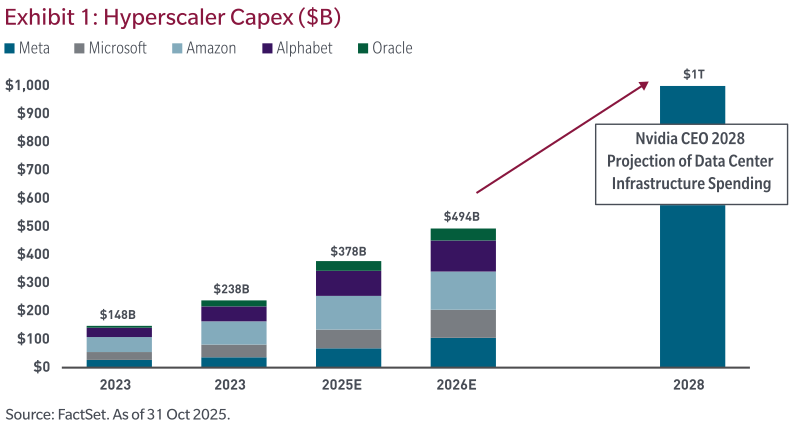
These are big numbers from an absolute dollar perspective, but it’s important to adjust for the growing size of the economy. Estimates show that AI spending as percent of GDP is in the 1%–1.5% range, which is not out of bounds when looking at previous extraordinary investment cycles, such as the .com period or even the building of railroads (which reached ~5% of GDP).
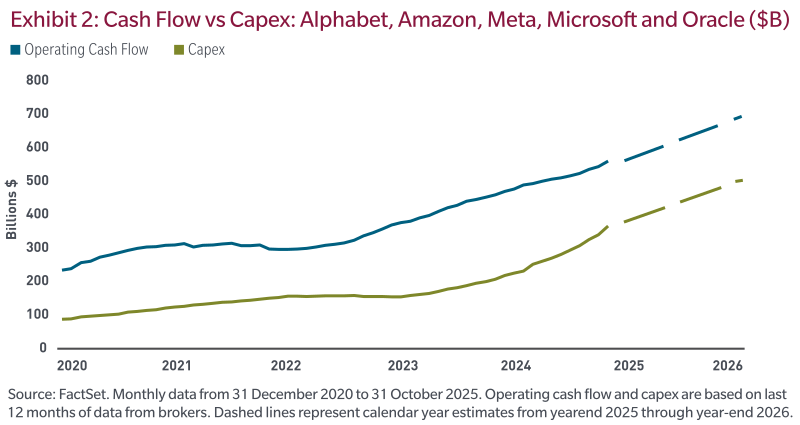
2. Concern: The amount of money spent by these large US technology companies means their risk has significantly increased.
We believe versus the .com bubble, the megacap technology names today are higher quality with stronger fundamental positions, including strong balance sheets, positive cash flow and higher profitability. Furthermore, the capital spending we are seeing today is primarily financed through cash flow, not debt like we saw in 2000.
3. Concern: After strong performance in recent years, these companies are expensive.
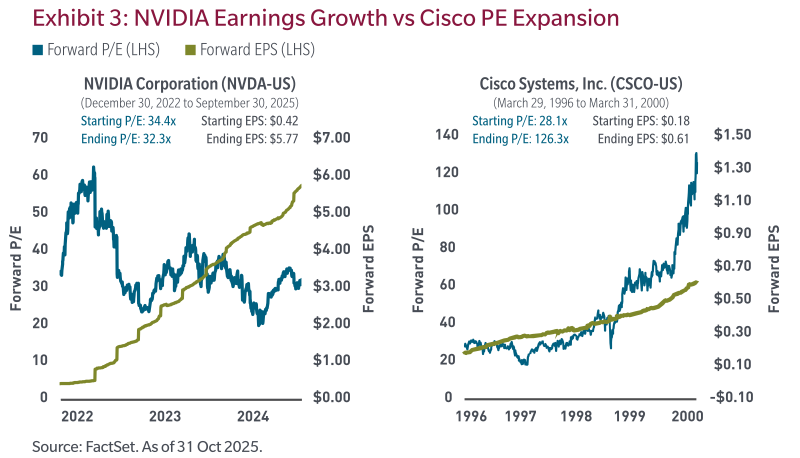
In March 2000, large-cap technology stocks were trading at much higher valuations, and stock price returns were driven by price-to-earnings (P/E) multiple expansion. Today, earnings estimates have been continually revised higher, and P/E multiples have not expanded at the same rate.
Perhaps the best example is Cisco vs. Nvidia. During Cisco’s period of outperformance during the .com bubble, the company generated strong earnings results but also experienced significant multiple expansion to upwards of ~120x earnings. Nvidia’s performance since the beginning of 2023, has been entirely driven by earnings (the PE has actually decreased).
4. Concern: AI demand will not support the investment in supply.
As previously mentioned, during the .com bubble, the industry invested in anticipation of significant growth in the internet. While the growth did eventually come, the problem was that it took a lot longer than anticipated. To put some numbers to that: it took 16 years for the internet to grow to one billion users worldwide.
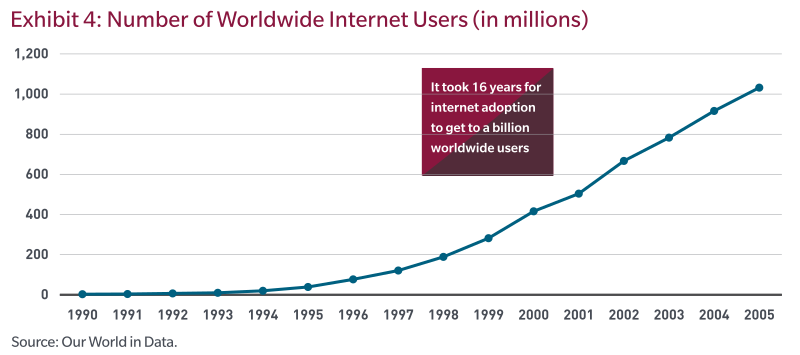
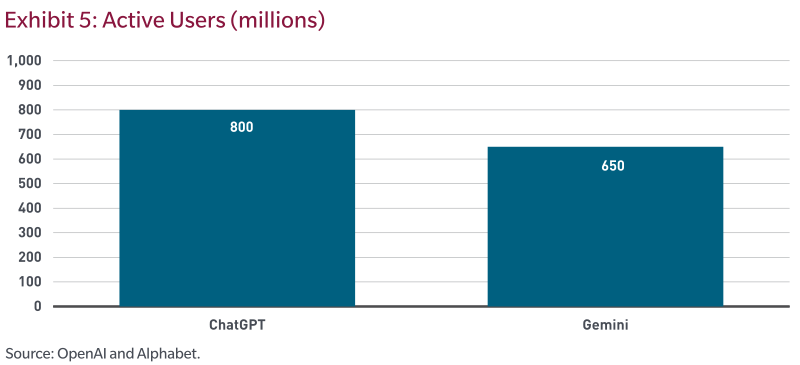
The difference today is that society has existing digital infrastructure and is more tech-savvy and better equipped to rapidly adopt new technology. For example, ChatGPT is less than three years old and has already grown to 800 million users worldwide. Gemini is less than two years old and has grown to 650M active users.
Our team’s view
In our Growth Equity team’s view, Portfolio Managers Brad Mak, Tim Dittmer and Eric Fischman remain constructive on companies leveraged to AI infrastructure spending, as the team believes this growth will continue to be visible over the coming years. This perspective includes direct exposure — such as semiconductors (production, manufacturing and design), data centers, and IT infrastructure — as well as indirect exposure to companies involved in power generation (including natural gas turbines, electrical components, and nuclear), which we see as a significant constraint in the current environment.
While the Growth Equity team recognizes that the cycle will eventually end, its duration remains uncertain. Our Growth Equity team will continue to monitor key data points daily to assess demand drivers and the durability of the capex cycle.
Keep in mind that all investments carry a certain amount of risk, including the possible loss of the principal amount invested.
The views expressed herein are those of the MFS Growth Fund Team and may differ from those of MFS portfolio managers and research analysts. These views are for informational purposes only and should not be relied upon as a recommendation to purchase any security or as a solicitation or investment advice. Past performance is no guarantee of future results. No forecasts can be guaranteed.
Diversification does not guarantee a profit or protect against a loss. Past performance is no guarantee of future results.